


It’s January 1st. You’ve written down your goals for the year - learn Spanish, hit the gym consistently, finally launch that side project.
Fast forward to March. You haven’t touched any of it.
You tell yourself: “I’m just not disciplined enough.”
You’re not alone. Only about 9% of people who make resolutions actually keep them. Almost half give up before February.
But before you conclude that goals are pointless, consider this: a 2020 study gave participants some basic support - simple guidance on how to set and pursue goals effectively. Nothing fancy. At the one-year mark, 55% had stuck with their resolutions.
That’s not a small difference. That’s the difference between almost everyone failing and most people succeeding.
What changed wasn’t the people. It was the approach. And that’s exactly what this article is about: the approach that works.
Why Your Brain Fights Your Goals
Every abandoned goal dies from one of two causes: you never start, or you lose interest before you finish.
Why You Can’t Start
You’ve heard dopamine called the “feel-good chemical.” That’s not quite right. Dopamine doesn’t reward you after you do something - it makes you want to do it in the first place.
Your brain releases more dopamine for things that are new, uncertain, or urgent. Checking your phone? Dopamine spike. Working on a goal you set three months ago? Almost nothing.
This is why you can desperately want something and still feel paralysed when you sit down to work on it. Knowing a goal matters is a thought. Thoughts don’t produce dopamine.
Why Goals Slip Away
Humans discount future rewards. Psychologists call this temporal discounting. A reward a year from now barely registers - even if it's bigger than one you could have today.
And when you stop thinking about a goal, you stop noticing opportunities related to it. You've experienced this in reverse: learn a new word and suddenly you hear it everywhere. Decide to buy a certain car and you see it on every block.
Your brain filters the world based on what you're focused on. When a goal is top of mind, you notice relevant opportunities. When it fades, those same opportunities pass right by.
The System That Actually Works
You’re fighting two things: a dopamine system that ignores non-urgent tasks, and a discounting bias that makes distant goals feel meaningless.
The solution isn’t motivation. It’s designing a system that works with your brain.
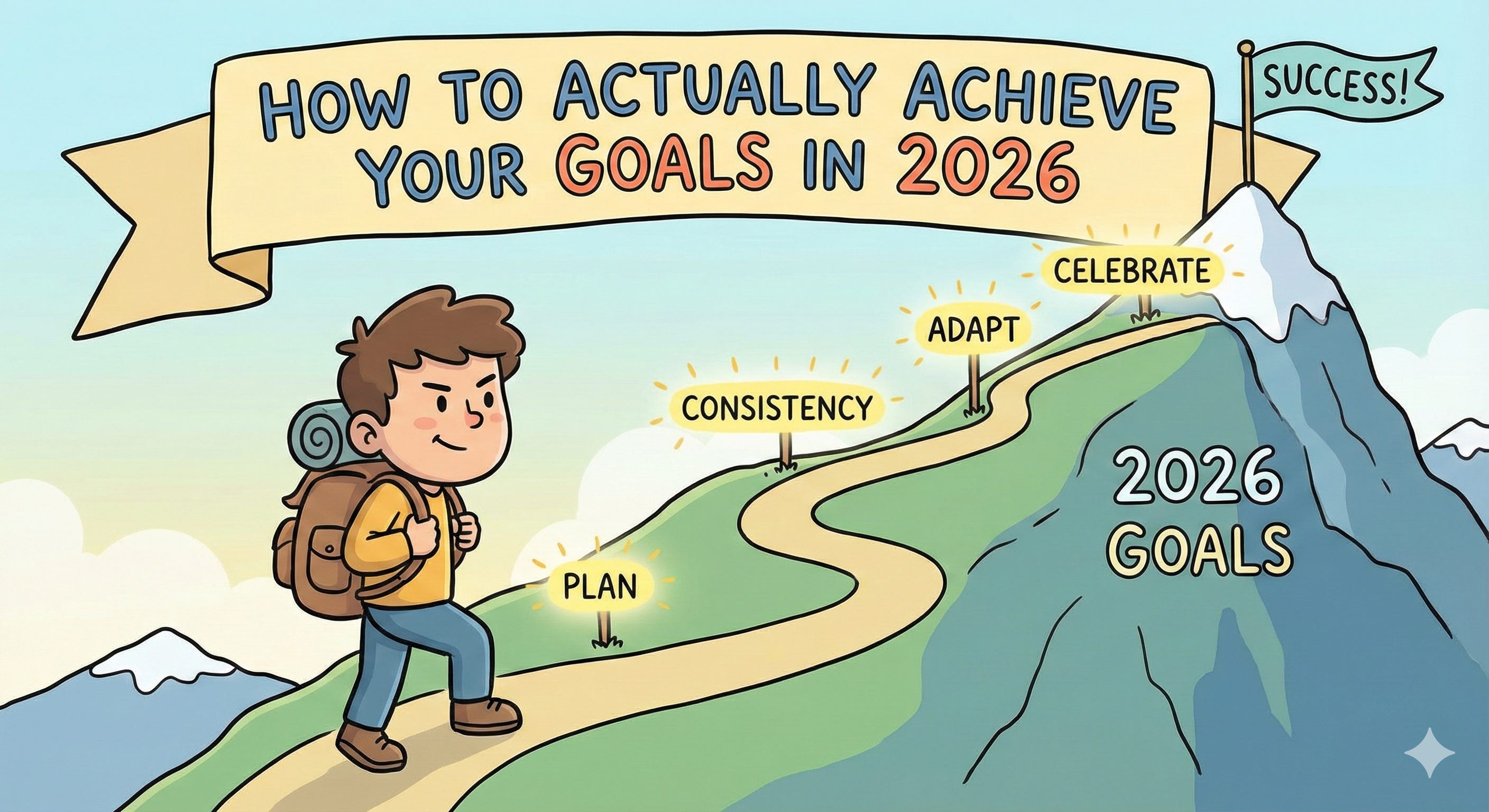
The Framework (Steps 1–4) solves the fading problem - keeping goals active so you notice opportunities.
The Tactics (1–5) solve the starting problem - giving your dopamine system reasons to care.
The Framework: From Theme to Daily Action
Step 1: Choose a Yearly Theme
Before setting specific goals, step back. What kind of year do you want to have?
A theme isn’t a target - it’s a direction. It captures who you want to become, not just what you want to accomplish. Use it as a filter: when considering any goal, ask Does this support my theme?
Good themes are short and resonant:
“The Year of a Calmer Mind”
“The Year of Deep Friendships”
“The Year of Physical Strength”
Write yours at the top of a page. You’ll come back to it every quarter.