


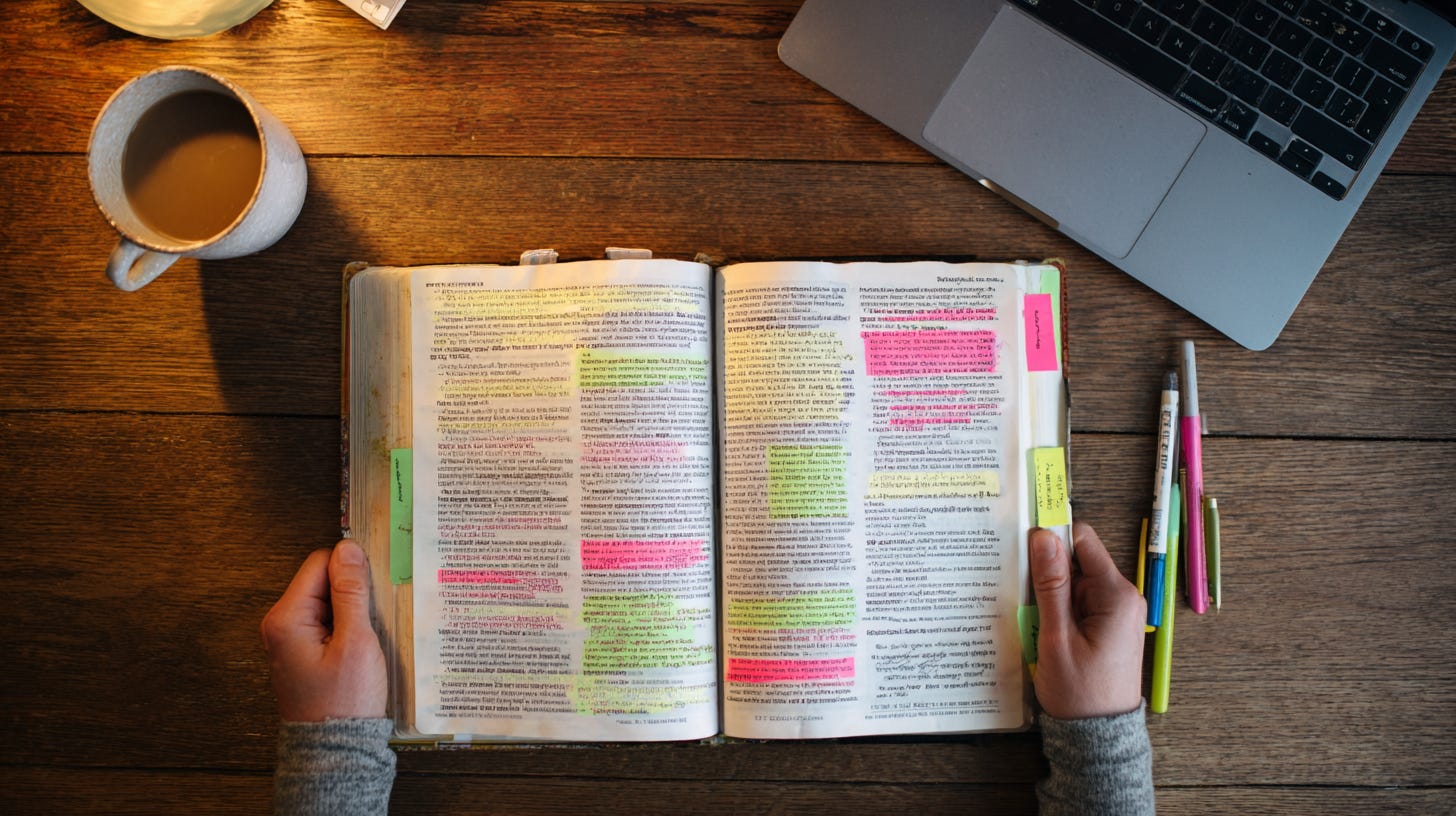
We have access to more information than any generation in history - and yet most people can’t recall a single insight from the last podcast they listened to.
That’s because we’ve optimised for consumption, not learning.
Double-speed podcasts, half-attention TED talks, highlighted paragraphs we never revisit - we treat learning like a volume game. It isn’t. And the reason comes down to three myths.
Myth #1: 3x Speed = 3x Knowledge
Every piece of learning involves two distinct stages: consumption (encoding new information) and digestion (consolidating it into long-term memory).
When new information enters your brain, your hippocampus creates a fragile, temporary trace - like dragging a stick through wet sand on the beach. For that trace to become a real memory, your brain needs a consolidation window: a period of rest where it replays the trace, strengthens the neural connections, and integrates it into your long-term cortical networks.
The trouble is most people never stop to digest.
The information was technically in front of their eyes, but their brain never got a chance to do anything with it. It’s the learning equivalent of writing paragraph after paragraph in wet sand, never noticing the waves washing each one away behind you.
Myth #2: You Need to Master the Foundations First
The belief that you should remember everything you read is based on how children learn - not adults.
Children start from nothing. They have almost no prior knowledge, so every piece of information must be built from scratch through brute-force memorisation and repetition.
Adults are the opposite - your brain already contains rich networks of knowledge, so it processes new information by asking "what do I already know that relates to this?" and integrating it into existing frameworks
Researchers call this “top-down plausibility-driven processing”. In plain English: your brain uses what it already knows to make sense of what it doesn’t.
In practice, this means stop trying to memorise what you read and start trying to connect it. Ask "what do I already know that relates to this?" - and let your existing knowledge do the heavy lifting.
Myth #3: All Information Should Be Studied The Same Way
Your brain doesn’t have one memory system - it has several, and they each need different strategies.
Procedural knowledge - how to do things - requires practice, not study. Reading about suturing won’t make you a surgeon.
Conceptual knowledge - ideas and frameworks - requires active processing. Your brain needs to wrestle with new concepts, question them, and map them against what you already know.
Isolated facts - dates, names, constants - require engineered retrieval. They have no conceptual anchor, which is exactly why spaced repetition and flashcards exist.
Most people never make this distinction. They default to one study habit and apply it to everything
What to Do Instead
Most people treat their brain like a container. Pour information in, hope it stays. But your brain isn’t a container - it’s a processor, and it processes different inputs through completely different hardware.
Below is a system built around how your memory actually works.
Step 1: Process Everything Before You Move On
Everything that follows is useless if you skip this step - and almost everyone does.
If you read something and don’t process it, you will forget it because unprocessed information disappears. So every time you read something, process it before you keep reading:
Hit a skill you can't practise right now? Close the book and go attempt it.
Encounter a concept you can't explain back? Pause and explain it out loud until you can.
Come across a fact you'll need later? Put it in a flashcard before you read another word.
Yes, this means you will get through less material per session. But you’ll actually remember what you read - which is the entire point.
So how do you process it? That depends on what type of knowledge you’re looking at.
Step 2: Identify What Type of Knowledge You're Looking At
This depends on your situation. Are you learning something because you want to - or because you have to?
If you’re learning by choice: learn only what you need.
Say you want to get good at cooking.
Rather than working through a fundamentals course - knife skills, mother sauces, flavour profiles - before you ever make dinner, just pick a dish you want to eat and try to make it.
You'll quickly discover your actual 'curriculum' is:
How to dice an onion → that’s a skill
What “deglaze” means → that’s a concept
What “simmer” actually looks like versus a boil → that’s a skill
In essence, try the thing first and let the walls you face tell you what to learn. Everything else is pre-studying an entire field to avoid a ten-minute problem.
If you're following a curriculum: sort the material as you go.
Sometimes you don't get to choose what to learn. You have a textbook, a course, an exam syllabus - and the content is already decided for you.
Instead, as you work through the material, actively sort what you’re encountering into buckets. Example: take a single page from an economics textbook on inflation:
“Inflation is the rate at which the general price level rises over time” - that’s a fact. A definition. There’s nothing to reason through, you just need to know it.
Flag it for flashcards.
“Demand-pull inflation occurs when aggregate demand outpaces supply, bidding prices up” - that’s a concept. There’s a causal mechanism you can explain, question, and connect to things you already understand about scarcity and competition.
Flag it for deep processing.
“Calculate the inflation rate given the following CPI data” - that’s a skill. No amount of re-reading the formula will build it.
Flag it for practice problems.
Step 3: Match the Strategy to the Type
If it’s a Skill:
Try it before you study it. Attempt the chord before the tutorial, write the function before reading the documentation. Students who struggled with problems before being taught the solution scored up to 3x better than those taught the traditional way.
Watch one tutorial per problem, not a playlist. The moment you start bingeing tutorials, you've switched from learning a skill to consuming content about a skill.
20 minutes daily beats 2 hours on Saturday. Learning happens between sessions, when your brain replays and strengthens what you practised. Five short sessions give your brain five nights of consolidation; one long session gives it one.
Stop before you get sloppy. Your brain can't tell the difference between a good rep and a tired, messy one - it just saves whatever you repeat.
If it’s a Concept:
Ask “why does this work?” before you ask “what is this?” Students who paused to ask “why” while reading a biology textbook scored 76% on the follow-up test versus 69% for students who read the same passage their own way.
Explain it out loud to someone who isn’t there. After you read a chapter or finish a lecture, open a voice memo and explain the concept as if you’re teaching a friend who knows nothing. If you get stuck then go back and try to learn that bit specifically.
Use an analogy you build yourself. Your brain learns new concepts by attaching them to things it already understands. So try to force that connection.
Then stress-test it: in what ways does the analogy hold? Where does it break down? This all helps build a deeper understanding of the concept you’re trying to learn.
When you revisit something, explain it from scratch - never just re-read it. Your brain mistakes familiarity for understanding, so the only honest test is whether you can explain it from scratch without looking.
If it’s a Fact:
Put it in a spaced repetition app (like Anki) and let the algorithm handle the scheduling. Medical students who used it scored 7–13% higher across every exam.
Make each card atomic. One card, one fact. If a card starts with “Explain…” or “Compare…”, it’s a concept - delete it.
Don’t use flashcards for anything else. They drill isolated facts through brute-force retrieval. That’s all they do. They won’t teach you guitar or help you understand monetary policy.
Bottom Line
We live in a culture that celebrates how much you consume. And it's produced a generation of people with ten browser tabs open, a half-finished Coursera course, and a vague sense that they used to be better at concentrating.
Slow down.
Your brain is extraordinary at learning - you just have to give it the chance to.
If you found this useful, these two are where I'd go next:
→ How to Stop Wasting Your Life
→ How to Stop Wasting Your Evenings (The Neuroscience of Post-Work Fatigue)
Saving this for later. After skimming through I know I’d love it
Really interesting stuff, I was surprised and disturbed that practicing a skill when tired can lead to deterioration. I used to think all practice was good practice, that drawing for hours would eventually lead to skill growth, but it explains why it can just result in bad habits.