


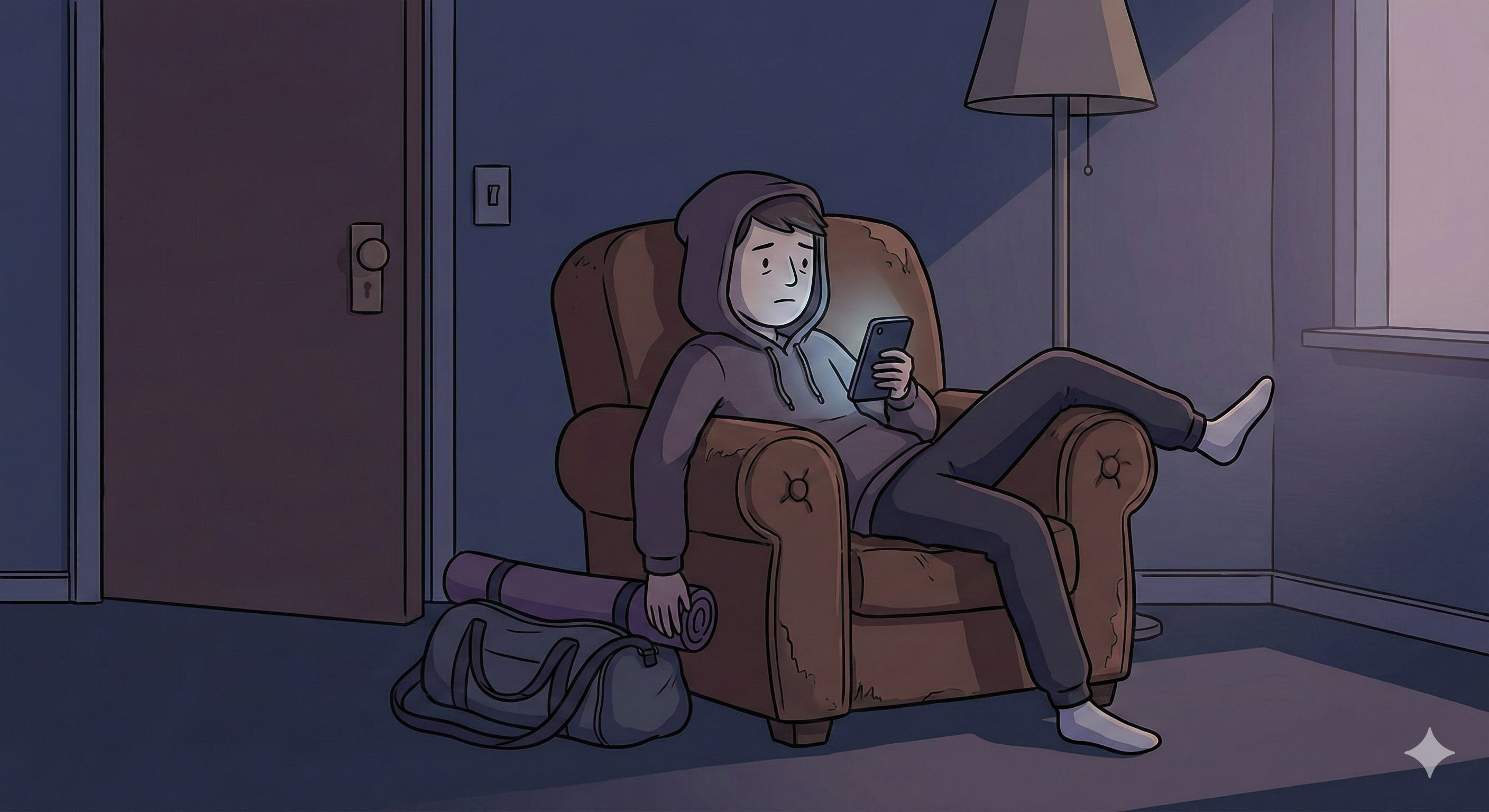
You’re on the sofa. You know you should get up - exercise, read, cook a real meal - but you can’t make yourself move. So you sit there, not resting, not working, scrolling through your phone while mentally rehearsing the tasks you’re not doing. You tell yourself you’re lazy.
You’re not. But to understand why this keeps happening, you need to know what a full day of work actually does to your brain.
Your Prefrontal Cortex Depletes Over the Day
Every time you focus on a difficult email, resist a distraction, or make a judgment call, you activate your prefrontal cortex - the region behind your forehead responsible for planning, decision-making, and self-control. In simple terms, it's the part of your brain that chooses the harder-but-better option.
But every activation has a metabolic cost. And we can now measure what that cost looks like.
A 2022 study from the Paris Brain Institute put two groups through a simulated workday lasting over six hours. Both groups performed the same types of tasks - but one group got a much harder version.
By the end of the day, the hard-task group showed a clear change in their brain chemistry:
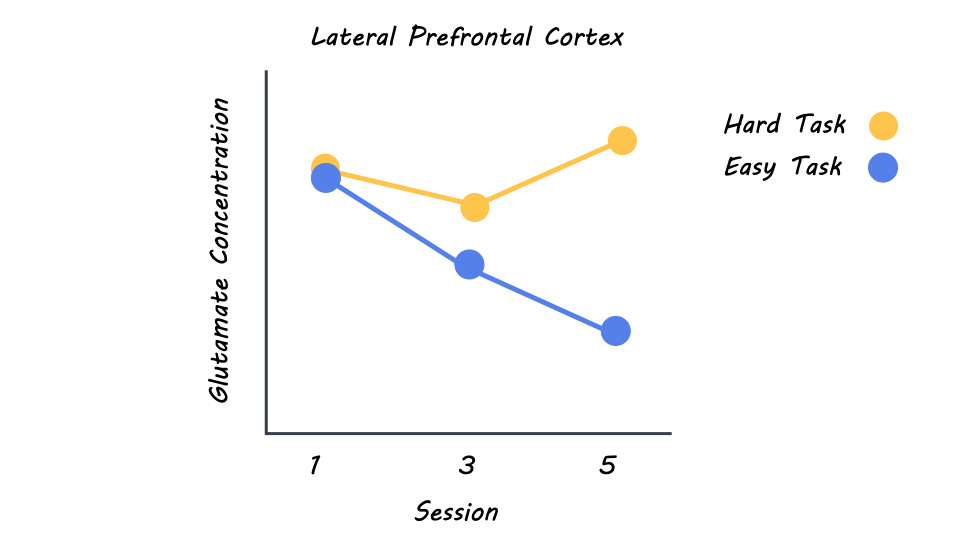
Hard cognitive work forced the prefrontal cortex to fire repeatedly. Every activation released a chemical called glutamate - the basic fuel neurons use to send signals to each other.
Over a full workday, glutamate built up faster than the brain could clear it. In small amounts, it’s essential. But when it accumulates in one region, it starts to interfere with that region’s ability to function.
The prefrontal cortex then became harder to activate. Think of it like lactic acid in a muscle - the harder you work, the more builds up, and the harder it becomes to keep going.
The result: the hard-task group participants defaulted to the easiest option available. A depleted prefrontal cortex could no longer override impulses or choose harder-but-better options. They became more impulsive and more likely to pick easy rewards over better ones.
That’s your evening. The phone instead of the running shoes. The infinite scroll instead of the book on your nightstand. Your depleted prefrontal cortex isn’t choosing what’s best - it’s choosing what’s easiest.
How to Get Your Evenings Back
If your prefrontal cortex is depleted by evening, the worst thing you can do is demand more from it. And that's exactly what most advice does - more planning, more decisions, more willpower.
The strategies below take the opposite approach. They follow the natural order of your evening, from leaving work to going to bed, and they work by asking less of a tired brain, not more.