


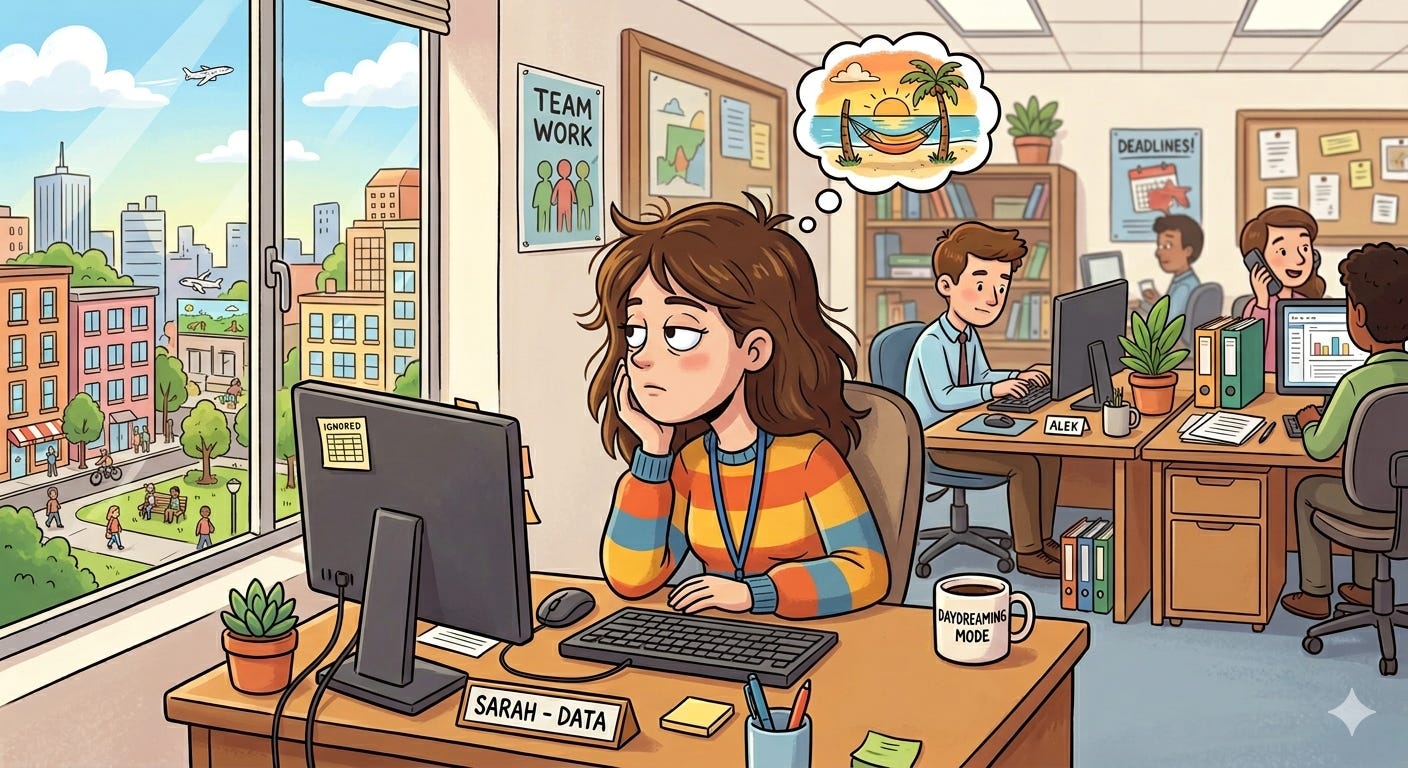
We spend a remarkable amount of our lives not really doing anything.
Around 8 hours a day asleep. And of the time we’re awake, the average person spends nearly half of it zoned out - daydreaming, mind wandering, tuned out from what’s actually in front of them.
On the face of it, this seems a colossal waste of time. Time spent staring out the window is time that could have been spent finding food or watching for predators.
But it isn't just us. Animals zone out too. And when a behaviour takes up this much time across species, it's usually doing a job we haven't figured out yet.
One Job Is Turning Experiences Into Memories
Memories don’t form the moment you learn something. It takes two steps, both of which happen in a part of the brain called the hippocampus:
Capture: Information from your senses flows into the hippocampus, which binds it together into a single experience - what you saw, heard, felt, where you were.
Consolidation: The hippocampus then sends that bundled experience back out to the rest of the brain, where long-term memories are held.
In short, information flows into the hippocampus when you're learning and back out when you're consolidating. The problem is that the road in and the road out of the hippocampus are the same road - and scientists increasingly think traffic can only run one way at a time.
This means your brain can't receive information AND turn it into a memory at the same time.
For a long time, we thought the only time this happened was during sleep which meant the story was simple: learn during the day, store it overnight. But it turns out it’s not that simple.
Zoning out can also help consolidate memories
In one study, participants listened to a short story. Then they spent 15 minutes doing one of two things:
Resting with their eyes closed
A “spot the difference” puzzle
The group that rested immediately after remembered twice as much of the story. Not just immediately but also a week later too.
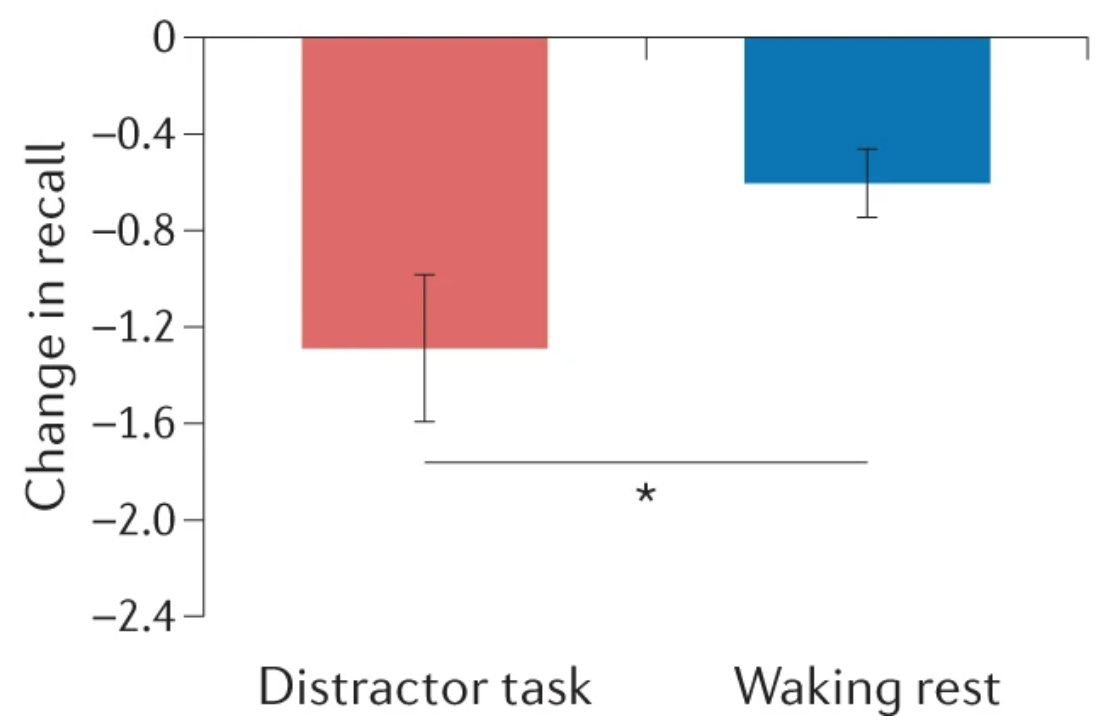
The natural next question was whether rest could really compete with sleep. So researchers ran the direct test. 15 minutes of eyes-closed rest produced almost the same memory benefit as a 30-minute nap.
The same pattern also shows up across motor learning, spatial learning, and other types of learning. Rest after learning consistently beat doing something else.
How to use this in real life
The challenge is that modern life has quietly eliminated inattention. This used to be most of life. Walks, queues, commutes, the gap between meetings.
Here's what the studies say are the best ways to actually build these periods of time back into your life.