


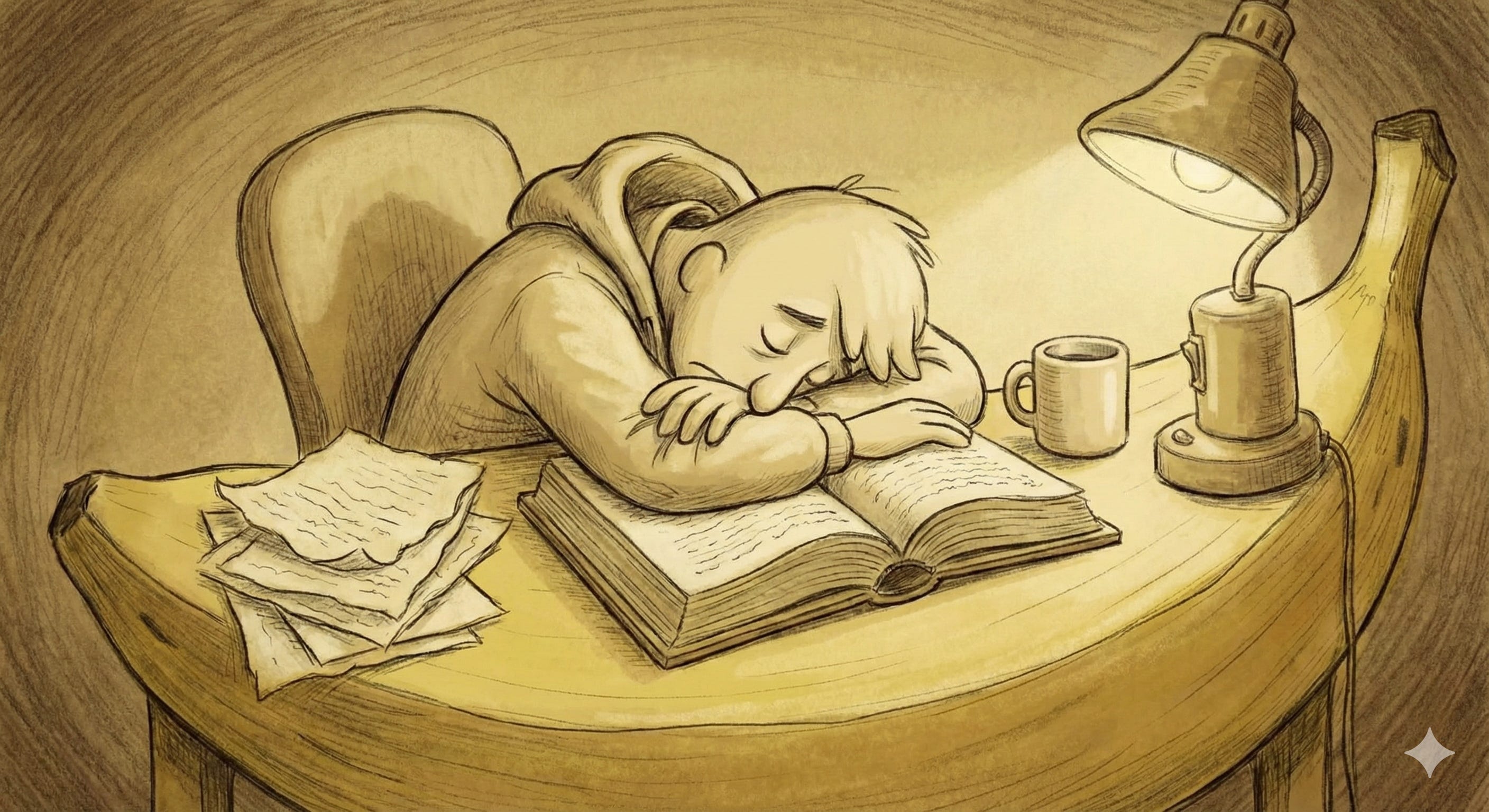
Lately, when I ask people how they’re doing, the most common response isn’t “sad,” “anxious,” or even “stressed.” It’s tired.
We usually think of tiredness as a physiological state - a lack of sleep or a need for better nutrition. Get those eight hours, drink more water, try a new supplement, and the fog will lift.
But then why can you feel perfectly fine until a specific name pops up on your phone? Why does exhaustion hit the moment you sit down to start your taxes?
That’s because tiredness isn’t just a physiological state. It’s an emotion.
Your Brain Is Running a Calculation
Like all emotions, tiredness has a function. Anxiety protects you from mistakes. Anger helps you set boundaries. Tiredness? It's designed to stop you from wasting energy.
Your brain constantly runs a simple equation: effort divided by probability of success.
When the workload looks massive and the payoff looks distant or uncertain, your brain makes a decision - withdraw the energy.
Tiredness is how that decision feels from the inside. It’s a signal, like anxiety warning you of danger or anger pushing you to set a boundary. The tired signal says: High effort, low odds. Don’t waste resources on this.
The Problem Is the World Changed
This calculation evolved for a world with better alignment between what mattered and what your brain thought mattered. Immediate threats. Immediate rewards. Immediate rest.
But modern life is full of things that are genuinely important yet feel, to your ancient brain, like a bad bet.
Taxes have deadlines your body doesn’t understand. Retirement is decades away. The promotion depends on work no one will notice for months.
Your brain looks at these things and sees: high effort, distant reward. So it pulls back. You feel tired.
Avoidance Makes It Worse
We're remarkably bad at predicting how we'll feel. Psychologists who study "affective forecasting" have found that people consistently overestimate how bad negative experiences will be - and how long the bad feelings will last.
The problem is, your brain believes its own predictions. It treats the disaster you've invented as fact.
And the longer you avoid something, the more vivid that version becomes. The email turns into a confrontation that never happens. The gym becomes an hour of suffering that actually takes twenty minutes. The friend you haven’t called becomes someone who’s already written you off.
So your brain recalculates. Pulls back. The tiredness deepens precisely because you listened to it.
Then you finally do the thing. And it’s fine. The reply is friendly. The workout feels good. Your friend is just happy to hear from you.
The task was never the problem. The story about the task was.
How to Get Your Energy Back
If the story is the problem, you need to change the story. That means stepping in before your brain makes up its mind – adjusting what it sees before it pulls back.
There are really only three things it’s looking at:
How big the task looks
How likely success feels
How far away the reward seems
These aren’t facts. They’re guesses. And guesses can be wrong.
The trick is figuring out which guess is tripping you up – because each one has a different fix.