


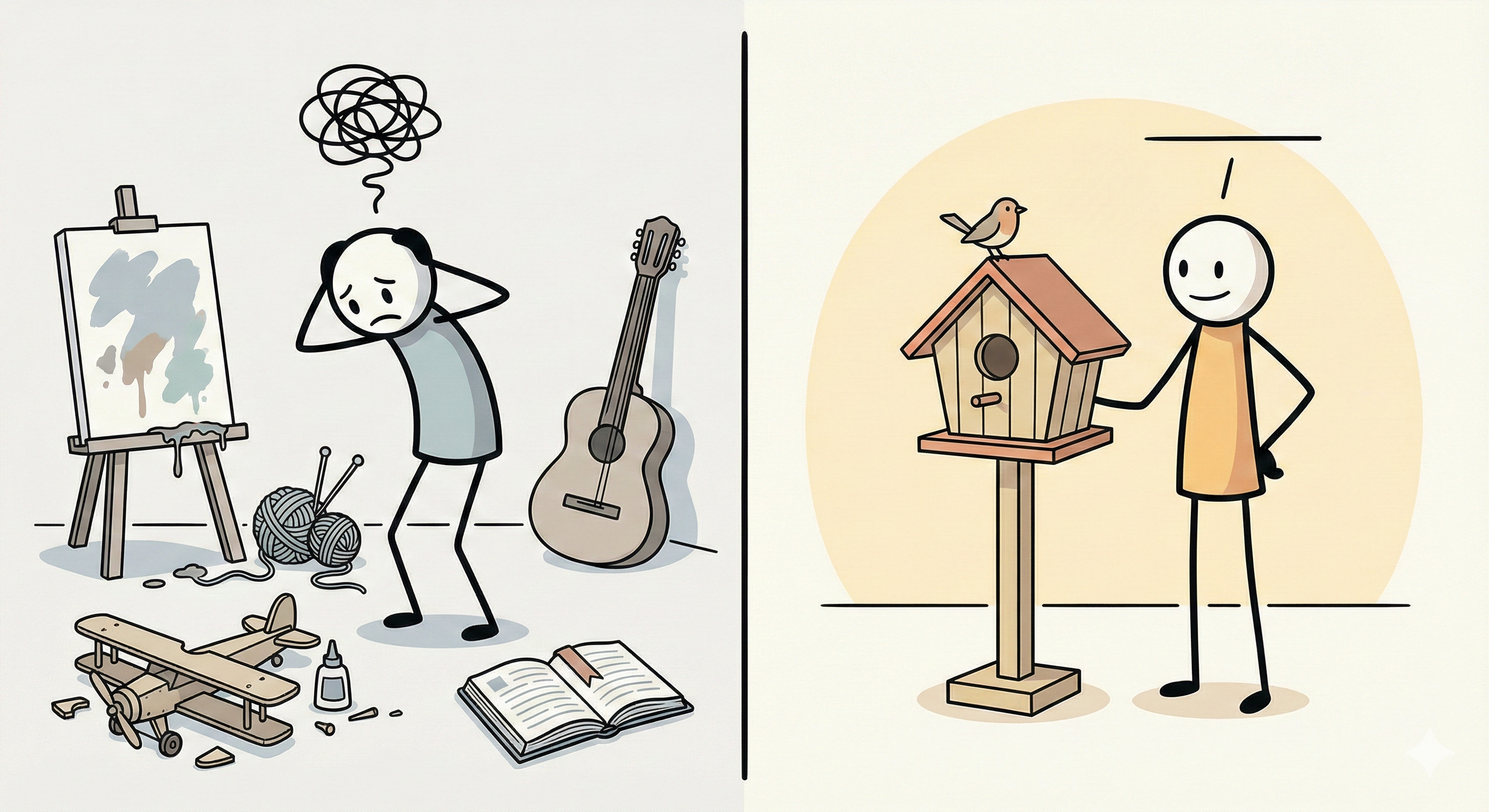
You watch a documentary about someone building a company from nothing, and suddenly you’re electric. You’re going to start that project. Learn that skill. Finally write that book.
Three days later? Nothing.
The guitar sits in the corner. The domain you bought expires. The notebook stays blank.
This post is about breaking that cycle for good - so you actually become the person you keep imagining in those inspired moments.
Phase 1: Inspiration
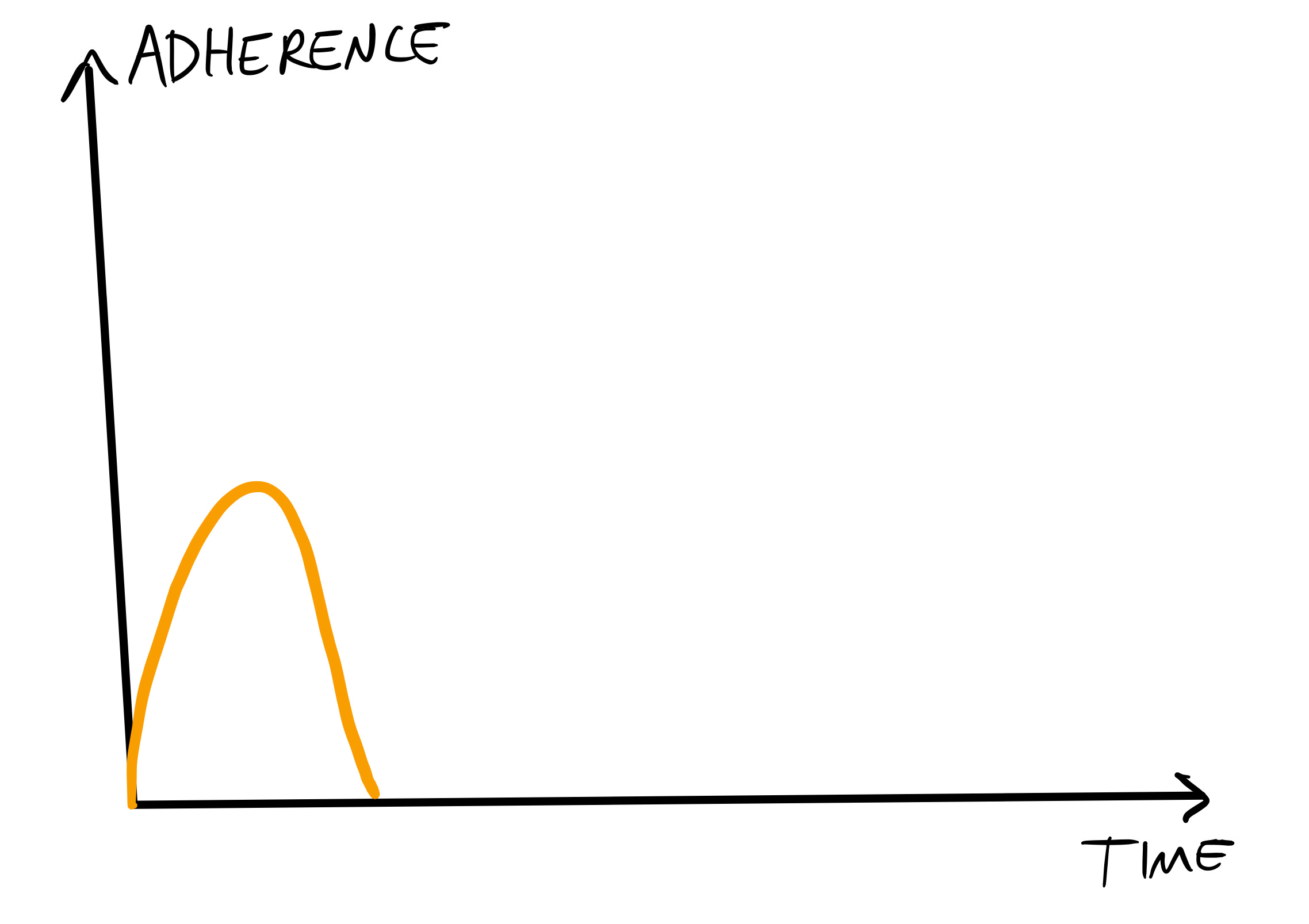
Inspiration is the spark - the flash of clarity that cuts through everything you’ve been telling yourself.
Maybe the elevator at work breaks and you reach your desk winded, thinking: when did this get so hard? That quiet, undeniable recognition is inspiration.
You can’t force these moments. But you can invite them.
Positive exposure: Spend time with people who’ve built lives that feel calm, connected, nourishing or read a biography of someone you admire.
Negative exposure: Confront honest evidence of where you are right now - the tension you’ve stopped noticing, the friendships you’ve let drift, the physical tasks that leave you winded.
Inspiration: Look at transformation posts, listen to podcasts, read testimonies. Find people who started where you are. Proof that this isn’t only for other people.
Inspiration is the spark, not the engine. It can’t carry you, but it can start you. And because it fades quickly, your next job is to convert that spark into something with a longer shelf life: motivation.
Phase 2: Motivation
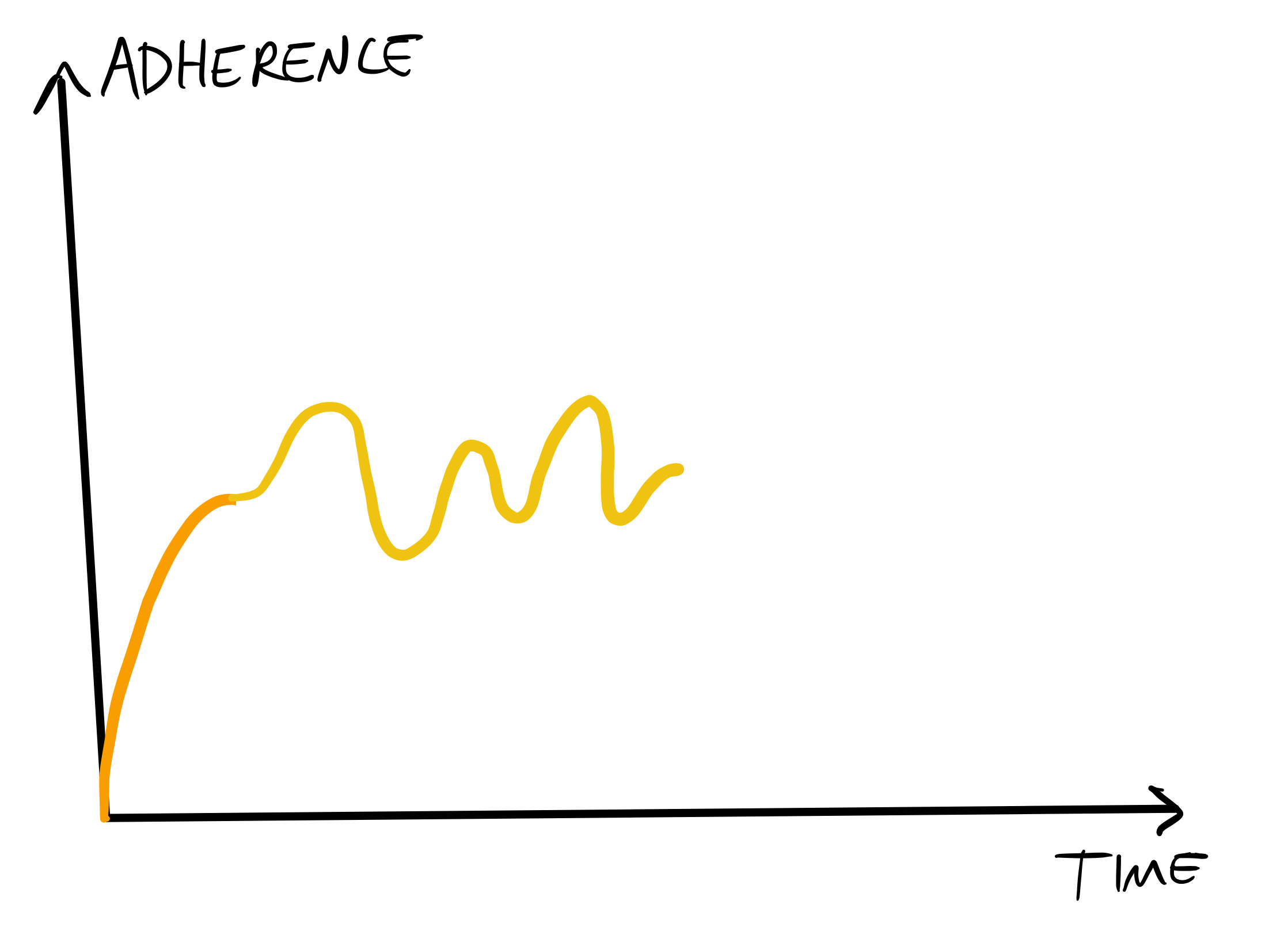
Once the spark of inspiration fades, you need a steadier force to keep you moving. That’s motivation - a clear, goal-directed picture of the outcome you want, vivid enough that it pulls you forward.
Motivation isn’t dramatic like inspiration. It’s quieter, and it naturally rises and falls.
(Think of picturing yourself speaking confidently in a meeting or feeling strong in your own body - that imagined version creates a pull).
These fluctuations are normal, but they also mean motivation can’t be your only support. If you only act when you “feel motivated,” progress becomes inconsistent and eventually stalls.
Still, you can strengthen it by feeding your brain the right inputs:
Define a vivid end goal.
Swap vague outcomes for specific movie scenes in your head - not just “get fit,” but “run for the bus without needing ten minutes to catch your breath.”Surround yourself with momentum.
Find a “Third Space” - like a library or climbing gym - where your desired habit is the default behaviour and you can simply copy the tribe.Let the small wins land.
Create visual proof of accumulation - like moving a paperclip to a jar for every completed session - to give your brain the dopamine evidence it needs to keep going.
Phase 3: Intention
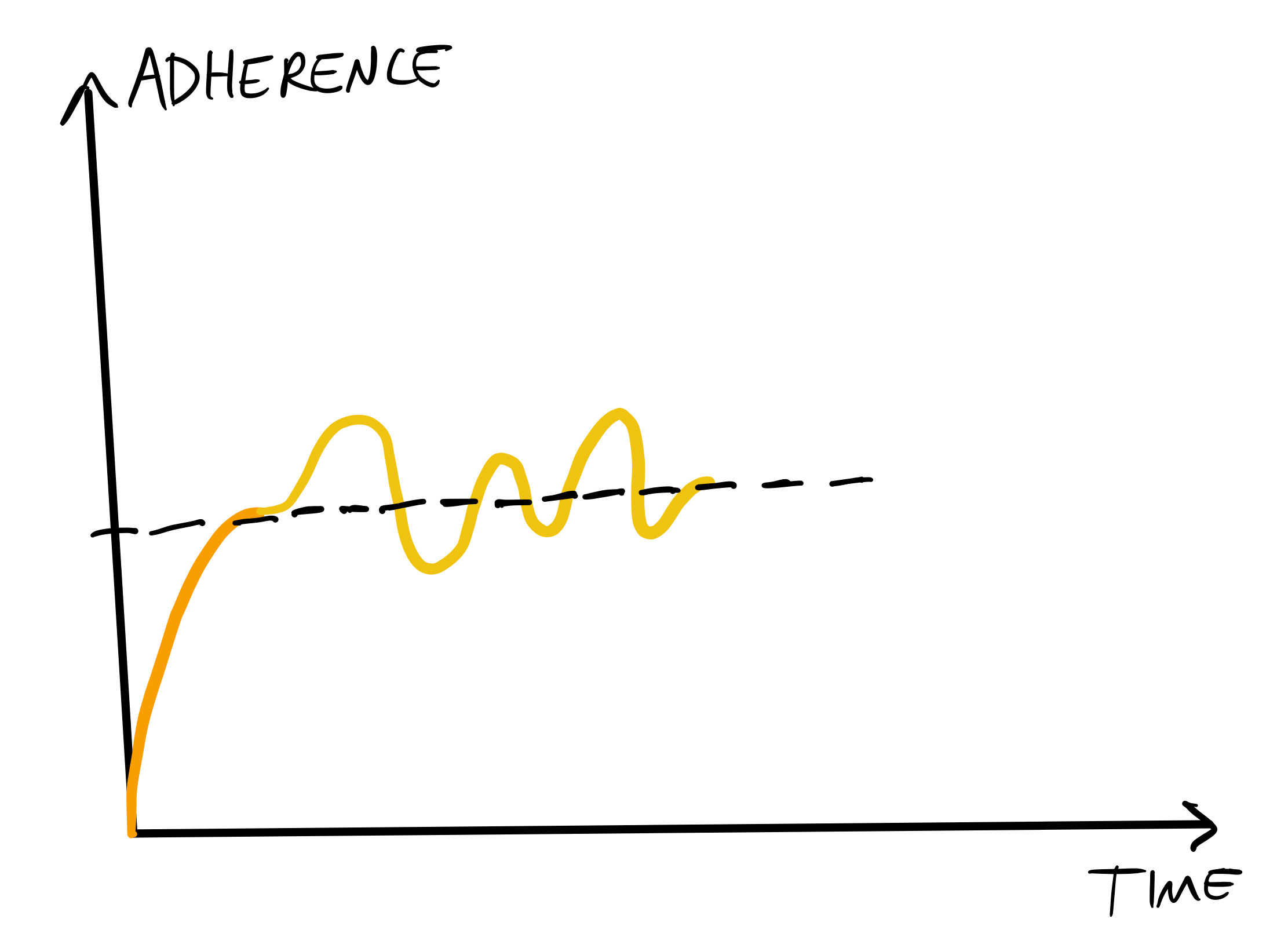
Here’s where most people get stuck: they have motivation (the want) but haven’t yet built intention (the plan).
Think of it this way: Motivation is dreaming about a road trip. Intention is having the map, the car packed, and the route ready to go.
Many of us want the outcome - to write the book, start meditating, or prioritise health - but we stall because we are waiting to “find time” or “feel ready.”
That moment rarely arrives on its own.
What helps is defining what showing up looks like on a daily basis:
“I will journal for 15 minutes every morning at 7 AM with my coffee, before I check my phone.”
“I will go for a 20-minute walk at 6 PM, right after I finish work.”
“I will meditate for 10 minutes every night at 9 PM in my bedroom with the lights dimmed.”
Notice the specificity.
Not “I’ll move my body when I have time.” That’s not a plan - that’s a hope.