



You’ve seen the headlines about ultra-processed food. You probably came away knowing it’s bad for you, but not what it actually is - or how seriously to take it.
It’s not a niche worry: it makes up about 60% of the calories people eat in the US and more than 50% in the UK - for most people, the bulk of the diet.
Three things are worth getting straight: what actually counts as ultra-processed, whether the food itself does any harm, and what’s worth changing.
It’s ultra-processed if it lists ingredients you don't have in your kitchen
You can broadly sort food into four groups by what’s been done to it:
Minimally processed: whole foods with nothing added, even if they’ve been frozen, dried, or canned. Vegetables, fruit, eggs, milk, plain rice, fresh meat and fish.
Culinary ingredients: the things you cook them with. Oil, butter, salt, sugar.
Processed: a whole food with salt, sugar, or oil added, the way you would at home, just bought instead of made. Smoked salmon, canned fruit in syrup, dry-cured ham.
Ultra-processed: formulations rebuilt from extracted ingredients and additives you’d never keep at home: protein isolates, modified starch, emulsifiers, flavourings, colourings, sweeteners.
Take a potato. Raw, it's minimally processed. Roast it in oil with salt and it's processed - still just potato and kitchen ingredients. Grind it into flakes and rebuild it with modified starch, emulsifiers, and flavourings, and you've got a stackable chip: ultra-processed.
People who eat more ultra-processed food have a higher risk of several diseases
Of 104 long-term studies conducted so far, 92 found a link of this kind.
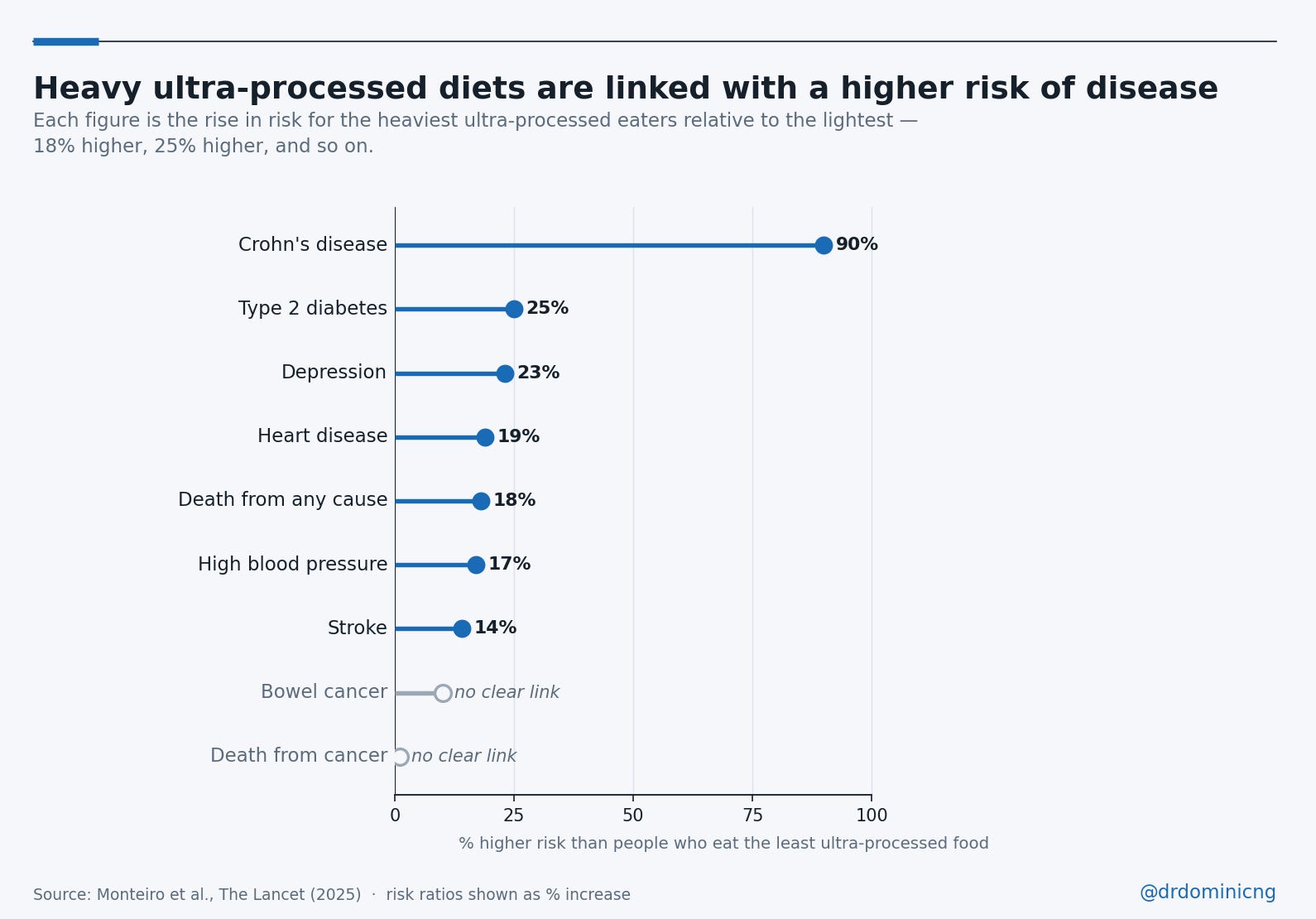
Risk was higher for most of the outcomes studied: type 2 diabetes (25% higher), depression (23%), heart disease (19%), death from any cause (18%), high blood pressure (17%), and stroke (14%) - and highest of all for Crohn's disease (90%). For two outcomes, bowel cancer and death from cancer, there was no clear link.
But the problem with numbers like these is that they're correlations - and we already know correlation ≠ causation. The people who eat the most ultra-processed food also smoke more, move less, and eat fewer vegetables. So the food might be making them ill, or those habits might be.
The processing itself seems to contribute, not just the salt, sugar, and fat
To find out, researchers ran a controlled trial.
Each person ate both diets - two weeks of ultra-processed food, then two weeks of unprocessed. That makes each person their own comparison: any difference in their weight couldn't come from the kind of person they were, because it was the same person both times. The doubt from before is gone.
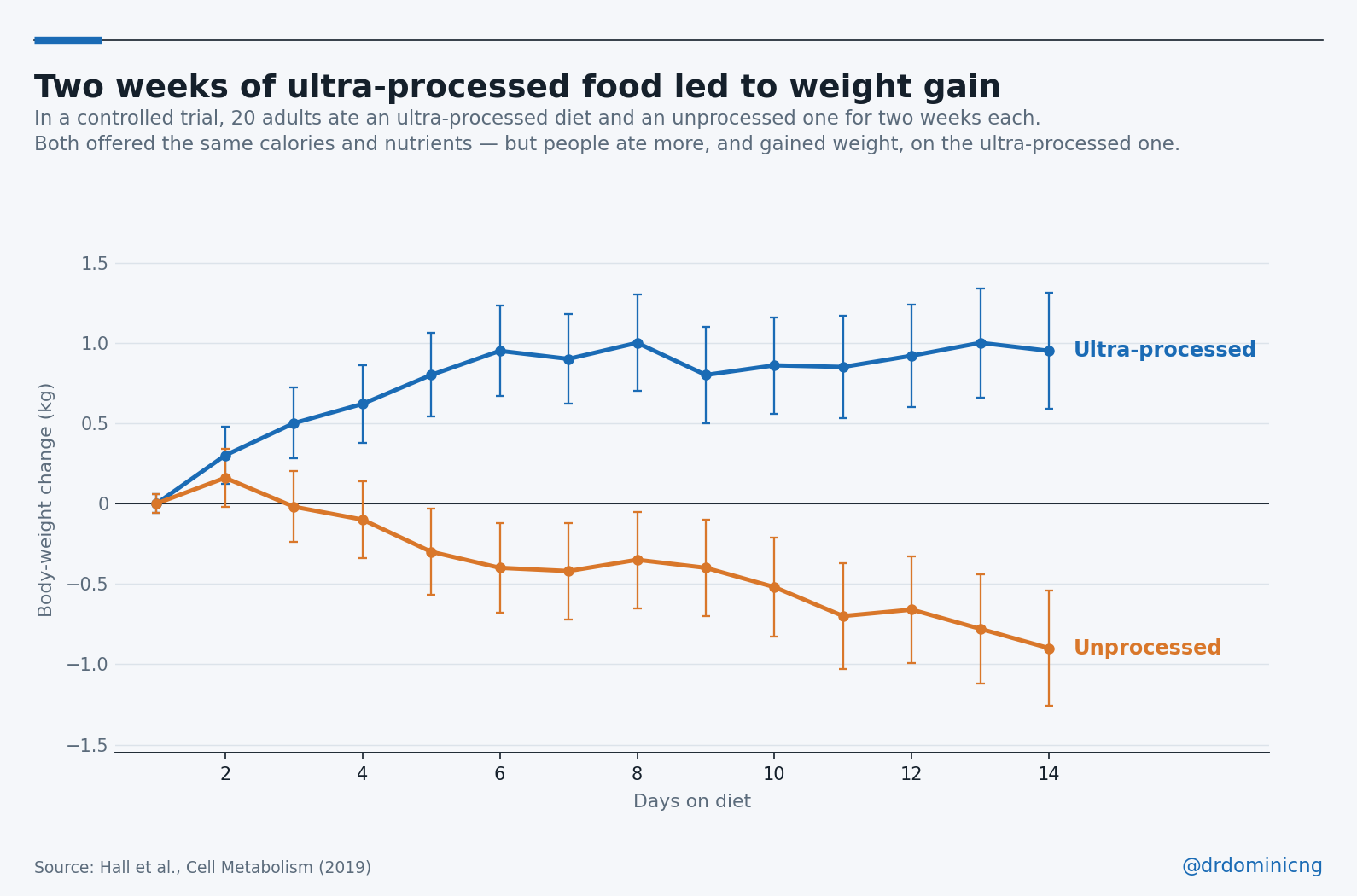
On the ultra-processed diet, people ate about 500 calories a day more - and gained weight, while losing it on the unprocessed one.
How it does this: extra calories, fewer protective foods, and added chemicals
Eating more is only part of it. The researchers point to several things acting together:
More calories: As in the trial above, people ate about 500 more a day on the ultra-processed diet.
Less of what protects you: Across 13 countries, a diet that's 15% ultra-processed food had about 12% fruit, veg, and beans; one that's 75% ultra-processed had just 4%.
Fewer protective compounds: In a French study of 110,000 adults, the heaviest ultra-processed eaters consumed 15 times more food colourings and 5 times more artificial sweeteners than the lightest.
Added chemicals: Emulsifiers, sweeteners, colourings, and flavour enhancers, plus compounds that form during processing or transfer from packaging - some of which may disturb the gut and cause inflammation.
How to actually cut down
Once you start reading ingredient lists, ultra-processed food turns up almost everywhere - your wholemeal bread, your "healthy" cereal, your protein bar. By the strict definition, a single emulsifier or bit of modified starch is enough to qualify, which sweeps up a lot of food that's basically fine.
Not all of it is worth worrying about
The studies don’t separate these two, but in practice they aren’t the same thing:
“Technically” ultra-processed: wholemeal bread with an added emulsifier, plain yoghurt with a thickener, tinned soup. Mostly fine.
The stuff worth cutting: soft drinks, sweets, reconstituted meat, packaged cakes - built almost entirely from sugar, refined starch, and additives.
Read the back of the pack, not the front.
The claims (”high protein,” “all natural”) are on the front. The ingredient list is what matters. The more of these you see, the more processed it is:
protein isolate, soy protein, whey protein
modified starch, maltodextrin, glucose-fructose syrup
emulsifiers: lecithin, mono- and diglycerides, polysorbate
colourings, flavourings, flavour enhancers (e.g. MSG)
sweeteners: aspartame, sucralose, acesulfame-K
Easy swaps to start with
Drinks: swap soft drinks and energy drinks for water, sparkling water, or unsweetened tea or coffee. Sweetened drinks are the largest single source of ultra-processed calories, so this is the biggest one change you can make.
Bread: pick a loaf that’s just flour, water, yeast, and salt, from a bakery or the fresh section. Long-life packaged bread adds emulsifiers and dough conditioners to last longer.
Yoghurt: buy plain and add your own fruit. Flavoured pots are usually high in sugar and set with thickeners and colourings.
Snacks: choose nuts, fruit, popcorn, or crackers with two or three ingredients. Flavoured chips are usually reconstituted and carry flavourings and flavour enhancers.
Cereal: pick one with a whole grain listed first and check the sugar. Frosted or “clustered” cereals are mostly refined starch and sugar.
Cheese: buy a block and grate it yourself. Pre-shredded adds anti-caking agents and slices add emulsifying salts.
Meat: slice roast chicken, turkey, or beef yourself. Deli cold cuts are high in salt and usually contain nitrites.
Cooking: make a quick sauce or dressing from real ingredients - canned tomatoes and seasoning, or oil and vinegar. Jars and bottles hide emulsifiers, thickeners, and sweeteners.
You don't have to cut all of it. Focus on the foods built mostly from sugar, refined starch, and additives - and if you change one thing, make it the drinks.
Thank you for this article. It’s written in a very accessible way. Ah… one of life’s greatest injustices: unhealthy food tastes so good… 🤤 A carrot may be healthy, but next to pizza it doesn’t stand much of a chance. A true test of character, wisdom, and questionable life choices 🤭
Great article! Distinguishing between technically ultra-processed food and the stuff actually worth worrying about is the most practically useful thing this piece does.