


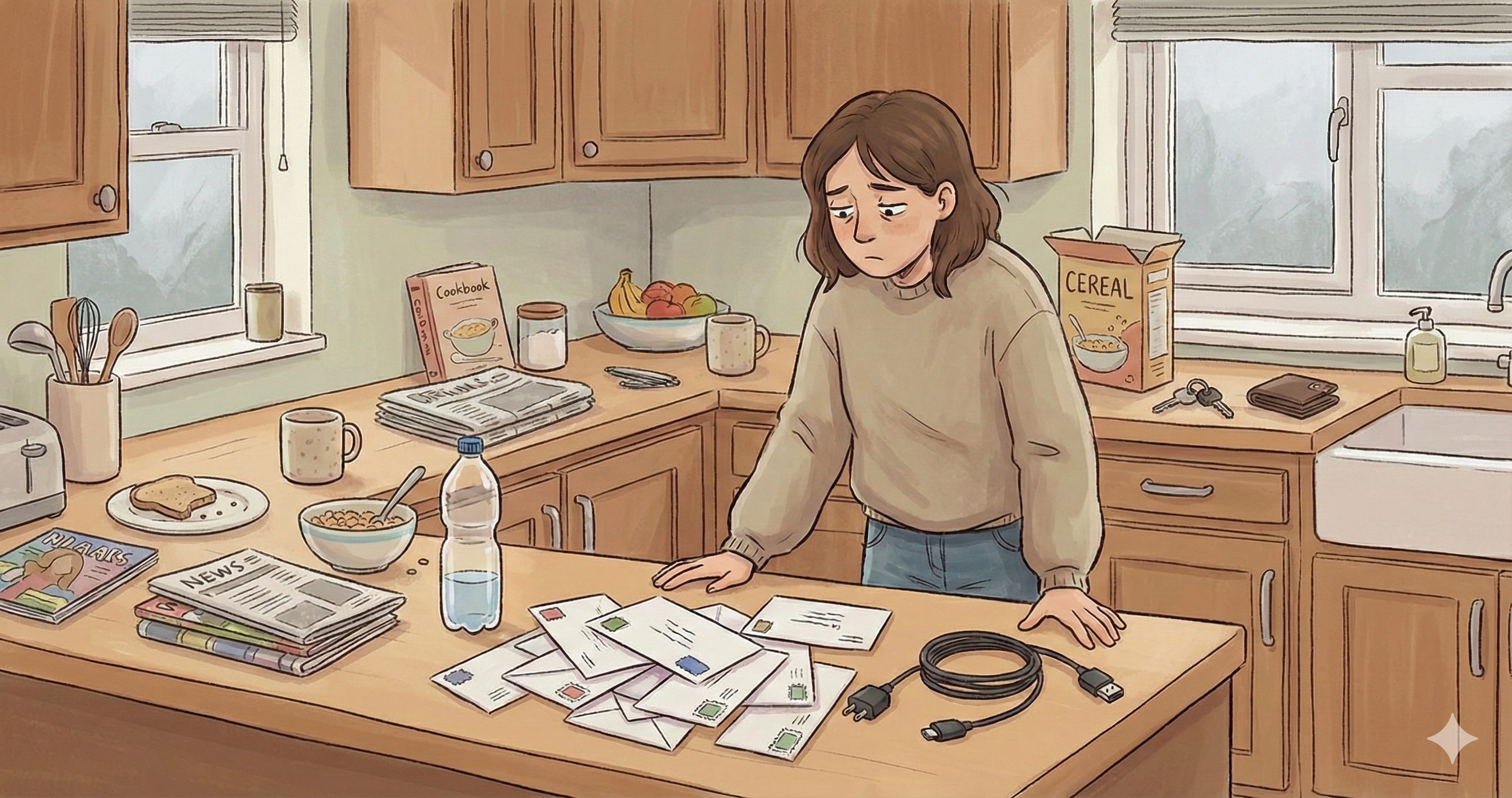
You can’t find your keys because they’re buried under a pile of post, a half-empty water bottle, and a charger you keep moving from room to room.
You tell yourself it’s not that bad. You know where everything is, roughly. And you’ll deal with it at the weekend - except the weekend comes and you don’t, because the thought of sorting through it all feels harder than it should.
So you decide you're just messy. Unorganised. But before you accept those labels, it's worth looking at what clutter is actually doing to your brain - and why clearing it feels so much harder than it should.
Clutter Drains Your Focus and Raises Your Cortisol
Ever sat down to work at a messy desk and struggled to focus? The reason is simple: your brain tries to process everything it can see, so the more objects in view, the less attention each one gets.
Brain imaging backs this up. When researchers showed people a single image in a scanner, it triggered a full neural response. But four images shown together? Each one got roughly a quarter of the activity that a single image did.
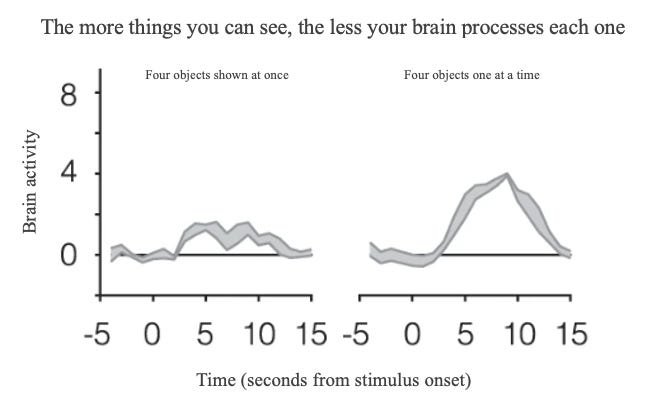
It’s like trying to listen to one person while nine others talk over them - you can still hear them, but it takes more effort and you lose parts of what they’re saying. Now scale that up to a whole cluttered room - dozens of objects, each one diluting your focus a little more.
And it's not just a focus problem. People living in cluttered homes show elevated cortisol levels, the same stress hormone pattern you'd see in someone under sustained pressure. Your brain isn't just distracted by the mess. It's stressed by it.
Three Reasons Your Brain Resists Decluttering
You know clutter is costing you. So why not just get rid of it? Here are three reasons you struggle to do it.
Your Brain Treats Losing a Possession Like Physical Pain
For most of human history, losing a resource could mean death. So your brain evolved to feel losing something about twice as intensely as getting that same thing in the first place. Anyone who's played Monopoly knows this instinctively - no one likes to trade, even for a deal that clearly favours them.
Brain imaging shows why. Contemplating giving up a possession activates the anterior insula - a region involved in processing physical pain. And this response scales with how much you value the item.
Sentimental Objects Feel Like Part of Your Identity
The concert ticket, the university hoodie, the book you read on holiday - your brain encodes these items as part of your identity. These are the objects where the pain response hits hardest, because discarding them doesn't just feel like losing a thing. It feels like erasing a piece of your history.
Decluttering Burns Through Your Daily Decision-Making Budget
Every choice you make - what to eat, what to reply, what to keep - draws from your prefrontal cortex, the region responsible for planning and self-control.
This region depletes over the course of a day. The first ten decluttering decisions feel fine. By thirty, your brain is spent. This is the same mechanism that makes your evenings collapse into takeaway and scrolling after a hard day at work - and it's why people start decluttering with energy and abandon it halfway through.
How to Declutter Without Fighting Your Own Brain
The strategies below are designed around these three barriers. Each one reduces the load on a specific mechanism so that the act of decluttering stays within what your brain can handle.
1. Sort by Category so Your Brain Can Build a Template
When you declutter room by room, every item is a different kind of decision. A book, then a cable, then a jumper, then a photo. Each one requires different criteria, and each one costs your prefrontal cortex fresh effort.